
Now Playing at SPAZ Radio: 2016-04-21 - Spukkin Faceship's Fukken Spaceship
Days until AMF!
The 28th annual Autonomous Mutant Festival is Mon. June 16 – Wed. June 25, 2025.
Mutant Fest is an annual FREE, 10 day camp-out music and art festival! It’s held in a new location each year on public land in WA, OR or Nor-Cal.
It’s 10 days long, because it’s not just a party! It’s a grand collaboration in which a fantastical village is created deep in a beautiful forest.
Expect 10+ legendary soundsystems, amazing music, non-stop dance floors, incredible performances, skill-share workshops, and carefully crafted chill zones.
Mutant Fest is open to all sound systems, DJs, VJs, musicians, performers and all others who want to participate. Don’t ask (there’s no one to ask). Just bring it. Do it yourself. Do it together. Live the alternative to mainstream festival culture and don’t wait for someone to give you permission either. Bring what you need, handle your shit, and participate in a strong underground community of like-minded deviants. See you at Mutant!
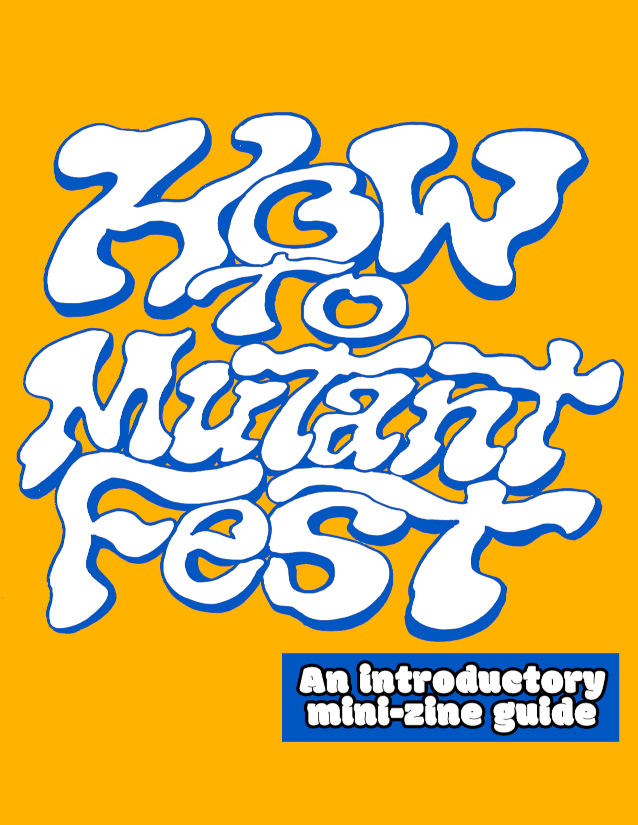
Click here to download the fantastic .PDF zine “How to Mutant Fest”. It has most of the info from this website, plus other info, all in a fun format.
AMF FAQ
Confirmed Participants
Confirmed Participants for Mutant Fest 2025: ❤ 3rdkltr/Olytopia ❤ Babyshaker Social Club ❤ Fairy Church ❤ Hoezone Layer ❤ Magical Unicorn Landistan ❤ Meat Camp ❤ No Limit ❤ Solarium ❤ SPAZ Soundsystem ❤ Thought Society ❤
What to Bring?
Mutant Fest is a DIY festival, meaning you are responsible for bringing everything you need to survive in comfort and style for the entire time you're here. Don’t expect ANYTHING to be provided for you. Here's some personal items we recommend you bring for yourself.
- Clothes for hot weather, for cold weather, and for wet weather, including sun visor/hat/sunscreen/sunglasses and a towel.
- Mosquito repellent, sunblock, toiletries, oral care, sanitary wipes, toilet paper, your meds, hand sanitizer
- Tent, rain tarp, extra tarps, sleeping gear, shade material, lighting, flashlights, headlamps
- Food. Bring enough to survive on, and to share. Do not plan on being fed.
- Water. Bring at least one gallon of potable water per person, per day.
- Bring re-fillable water containers of various sizes & bring buckets (for dishes, etc).
- Kitchen. Dishes, silverware, cook pots, stove, fuel, coolers, food bins, sponges, bio-dish soap.
- Trash bags. You are responsible for packing out your trash and recyclables.
- Fire safety: extinguisher, 5 gallon bucket for water, shovel, fire permit.
- First aid kit
- Car aid: fix-a-flat, spare tire, jack, oil/coolant, jumper cables, duct tape, rags, tools
- Health & Hygiene: bring toilet paper; bug spray; first aid; condoms; BRING YOUR MEDS (allergies, prescription, etc).
With so many ways to creatively participate at Mutant Fest, it's good to come prepared for whatever creative things happen. Sharing is caring and it's greatly appreciated to bring extra supplies to contribute to the overall vibes of the festival!
- Audio equipment: Acoustic and electronic instruments, percussion, microphones, DJ gear, audio mixers, audio cables, power cables, computers, recording devices, headphones
- Art supplies: screen printing materials, stuff to make signs, paper, cardboard, paint, brushes, cloth, markers, collage making supplies, glue, tape, etc etc etc.
- Clothing: costumes, wigs, makeup, jewelry, footwear, glasses, cloth, mirrors, hats, scarves
- Decorations: lights of all kinds, tarps, banners, parachutes, projectors, curtains, rugs, art, knick-knacks, dancefloor accessories
- Chairs and tables, or table top surfaces (plywood). The more stable surfaces the better.
- Picks, shovels, hoes & rakes (for digging shitters, compost pits & sometimes firefighting.)
- Cans for ash trays.
How to Participate?
- If you're a musician or DJ, bring your gear!
- Love to perform? Come perform!
- Got some knowledge? Come share it!
- Make art? Bring your art!
- Have medical or first aid knowledge? The Med Tent is always looking for volunteers.
- Help set up other camps and soundsystems
- Help with car and generator maintenance
- Pick up trash
- Go on runs to town for supplies
- Wash dishes
- Prep food
- Help clean and pack up
- If you're unsure what you can do, ask a mutant!
Bears
Bears are sometimes a feature of AMF. Carrying bear spray and knowing how to use it are very good ideas! Here’s a good video on how to use bear spray: Bear Spray Scenarios
Bears are curious, intelligent and potentially dangerous animals, but undue fear of bears can endanger both bears and people. Most bears tend to avoid people.
Give bears plenty of room. Some bears are more tolerant than others, but every bear has a “personal space” – the distance within which a bear feels threatened. If you stray within that zone, a bear may react aggressively.
Don’t let bears learn that human food or garbage is an easy meal. It is both foolish and illegal to feed bears, either on purpose or by leaving food or garbage that attracts them. Hang food out of reach of bears if possible. Pets and their food may also attract bears.
Keep a clean camp. Wash your dishes. Food and garbage are equally attractive to a bear so treat them with equal care.
If you see a bear, avoid it if you can. Give the bear every opportunity to avoid you. If you do encounter a bear at close distance, remain calm. Attacks are rare. Chances are, you are not in danger. Most bears are interested only in protecting food, cubs or their “personal space.” Once the threat is removed, they will move on. Let the bear know you are human. Talk to the bear in a normal voice. Wave your arms. Help the bear recognize you. If a bear cannot tell what you are, it may come closer or stand on its hind legs to get a better look or smell. A standing bear is usually curious, not threatening. You may try to back away slowly diagonally, but if the bear follows, stop and hold your ground. Don’t run-You can’t outrun a bear, and like dogs, they will chase fleeing animals. Bears often make bluff charges, sometimes to within 10 feet of their adversary, without making contact. Continue waving your arms and talking to the bear. If the bear gets too close, raise your voice and be more aggressive. Bang pots and pans. Use noisemakers. Never imitate bear sounds or make a high-pitched squeal.
If a bear actually makes contact, surrender! Fall to the ground and play dead. Lie flat on your stomach, or curl up in a ball with your hands behind your neck. Typically, a bear will break off it’s attack once it feels the threat has been eliminated. Remain motionless for as long as possible. If you move, and the bear sees or hears you, it may return and renew its attack. In rare instances, particularly with black bears, an attacking bear may perceive a person as food. If the bear continues biting you long after you assume a defensive posture, it likely is a predatory attack. Fight back vigorously. Punch it in the nose, or use a knife to stab its nose.
Weather
Thanks to Global Climate Change, the window of time in Cascadia between when the rain stops and the fires start has gone from months to weeks. There is a possibility that it will still be raining and/or muddy/wet during Mutant Fest. Watch the weather forecast and be prepared.
- Don’t allow anything wet into your tent
- If your clothes get wet, change into dry ones. Don’t stay in wet clothes, especially after dark.
- Bring waterproof shoes and a rain jacket. Water resistant is not waterproof. You want waterproof.
- Bring plastic bags to store things that really shouldn’t get wet
- Keep fresh air circulating in your tent
- Bring extra socks
- Pack quick drying towels
- Make sure the rain fly on your tent is taut
- Bring an extra blanket or two
- Pack synthetics and wool not cotton.
- Use a walking stick or two if you’re out on wet ground, especially in the dark. The extra points of contact with the ground can help you keep your balance if you hit an unexpected slippery patch of mud or a wet rock, branch, log, etc..
- If you are bringing sound, put wood shipping palettes underneath your subs to raise them off a few inches off the ground to prevent them from water intrusion. Also bring heavy duty tarps, big ones.
Latrines
There will be no porta potties.
One of the primary objectives of the AMF is to encourage individual and group autonomy, as well as more awareness of our impact on the world. At the core of this, is the issue of human beings and the shit that they produce. Porta potties would be a major expense which would reduce the ability to have a free festival. They are also wasteful (they use lots of water and chemicals) and are unnecessary in an area that can withstand the impact of a 10-day long festival, as long as people are practicing conscious shitting skills. Learning how to shit in the woods will teach you a lot about how we can have a much more positive relationship to the other living things around us.
Dig a latrine and use it. Never take a dump on top of the ground and walk off and leave it.
Latrines are at least 100 feet from open water, and never uphill from a spring. Deep narrow trenches at least 3 feet deep are best. Keep the excavated soil in a neat pile for fill-in later. Cut out sod, and preserve it for replacement over the filled hole.
Keep lime – or ashes from a wood fire – in a can nearby, and sprinkle on top of your leavings, to reduce odor. Dirt is then shoveled back in on top gradually, to keep your waste covered completely. When the contents come up to within 18 inches of the surrounding ground level, fill the latrine in all the way and dig a new one nearby.
Fire Safety
Never leave a campfire unattended. Even a small breeze could quickly cause the fire to spread. When finished with your fire, drown the fire with water. Make sure all embers, coals, and sticks are wet. Move rocks—there may be burning embers underneath. Stir the remains, add more water, and stir again. Be sure all burned material has been extinguished and cooled. If you do not have water, use dirt. Mix enough soil or sand with the embers. Continue adding and stirring until all material is cooled. Feel all materials with your bare hand. Make sure that no roots are burning. Do not bury your coals—they can smolder and break out. Treat charcoal briquettes like any other fire (see above).
When smoking is permitted outdoors, safe practices require at least a 3-foot clearing around the smoker. Grind out your cigarette, cigar, or pipe tobacco in the dirt. Never grind it on a stump or log. Use your ashtray while in your car. Smoking isn’t that necessary that you can’t go somewhere safe to do it.
Spark Arresters: All types of equipment and vehicles are required to have spark arresters. Chain saws, portable generators, cross-country vehicles, and trail bikes–to name a few–require spark arresters if used in or near grass, brush, or a wooded area. To make sure that the spark arrester is functioning properly, check with the dealer or contact your local Forest Service or State forestry office.
Vehicles can and will ignite grass. Always park on gravel roads or parking lots. If you must park on the grass because you have heavy equipment like soundsystem or tent, it’s a good idea to let the engine and exhaust cool down a little on some gravel before moving to the grass. While your vehicle is cooling go to the spot where you will be parking and dig a fireline about 5′ larger diameter than the vehicle on all sides. A fireline should be 2 feet wide and 1 foot deep. Deep enough to get past most of the grass roots. Buckets of sand or water should be placed near every vehicle, generator, and larger tent. Bigger vehicles should have more buckets.
Legal
AMF is a completely free, non-commercial festival, therefore we require no permit either from the U.S. Forest Service or the Bureau of Land Management. There are certain regulations limiting groups to 200 people and 50 vehicles, but we consider AMF to be a decentralized collection of independent camps. Festival goers should be ultra-conscious of speed limits and road signs entering and exiting the site, as local cops are sometimes anxious to write expensive tickets. Also keep in mind that AMF, although a temporary liberated zone, is still subject to laws regarding illegal substances.
Directions will be posted on June 15 or 16 so stay tuned!